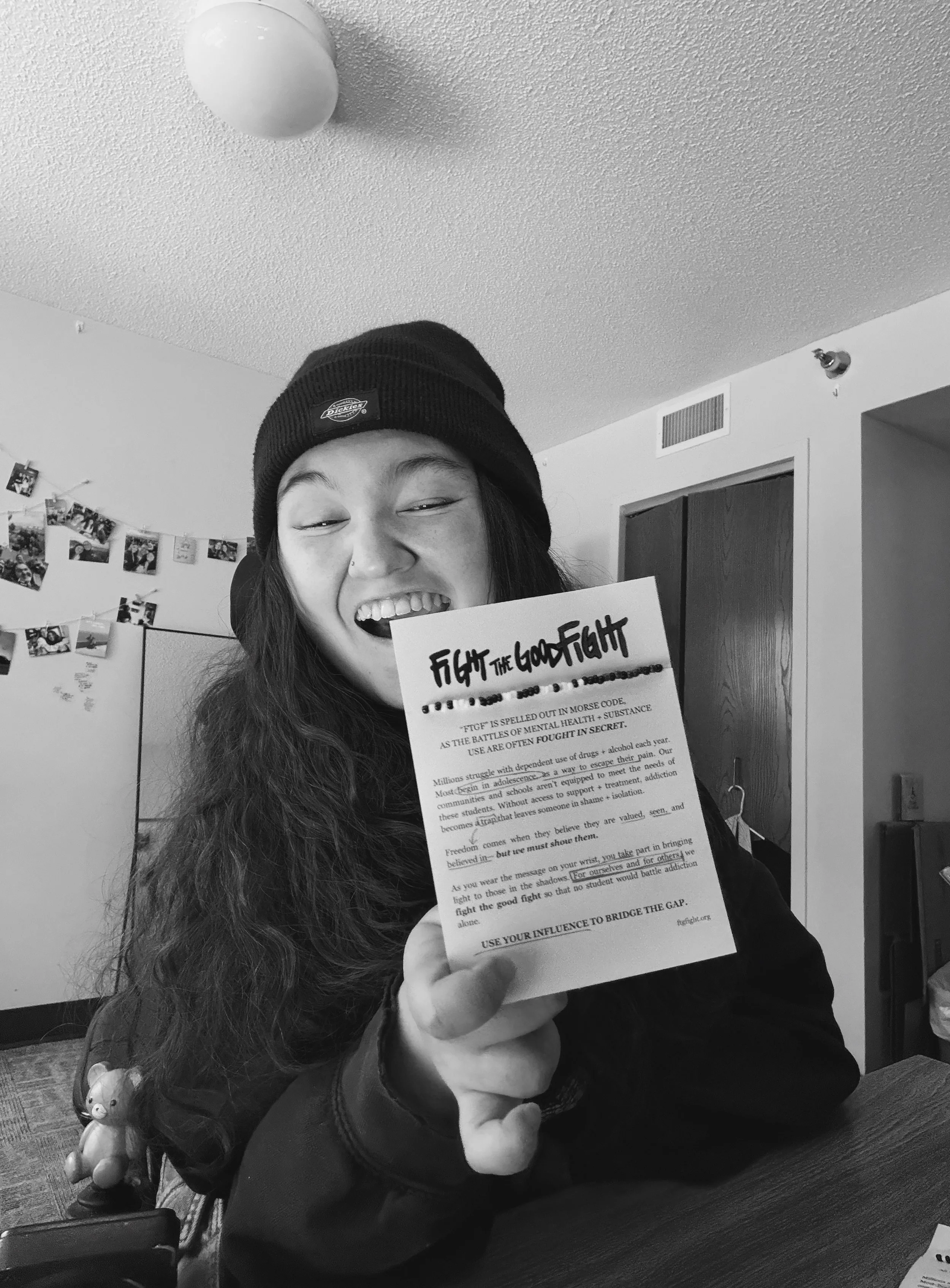
This 11th grade “passion project” wouldn’t be over… FTGF is more than bracelets.
I was finalizing things and knew…
The Battle in Our Backyard.
Substance use has always been part of my story — as a family member’s drug use caused great separation. I grew up believing they chose drugs over us. All addicts were a pile of poor decisions and a lack of self-control. I rolled my eyes at those who partook in drugs or alcohol.
Until high school, where my best friend began to struggle with substance abuse. I watched them and others that I held close fight to be sober. I saw first-hand the cycle of dependence, shame, and isolation of adolescent substance use.
My eyes were open to my indifference. Addiction was no thing to be scoffed at. Or mocked. Or mad about. It was a crushing weight to be under, and an impossible battle to fight alone.
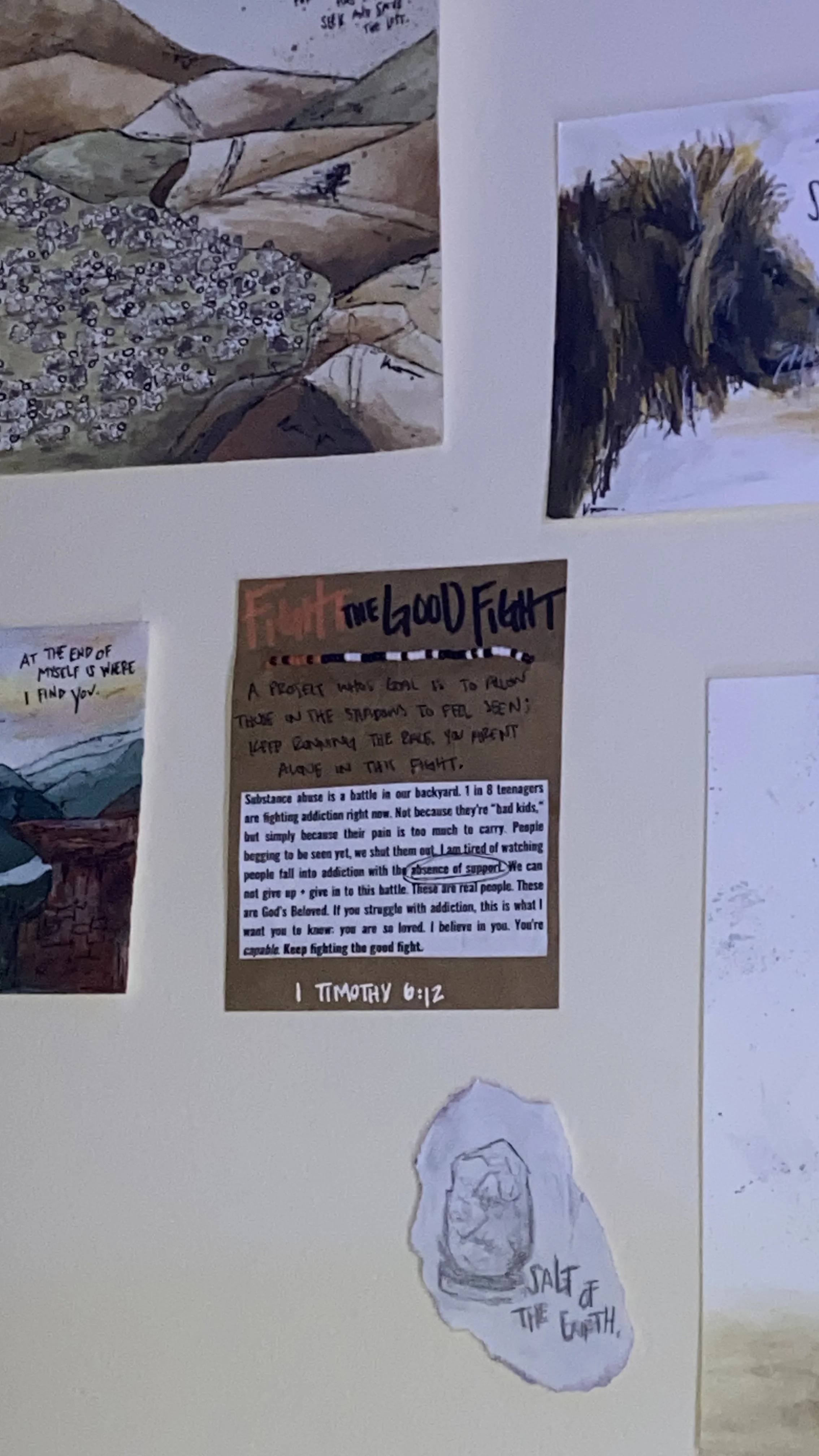
At 17 years old, after having a conversation with a classmate who I’d learned had been using opioids, my heart burned for substance use. I had no idea. I looked up the statistic at the time, and read “1 in 8 students in school face a dependent use of drugs and alcohol.” I cried at my own indifference to the battle that existed in our backyard. No one deserves to face this alone.
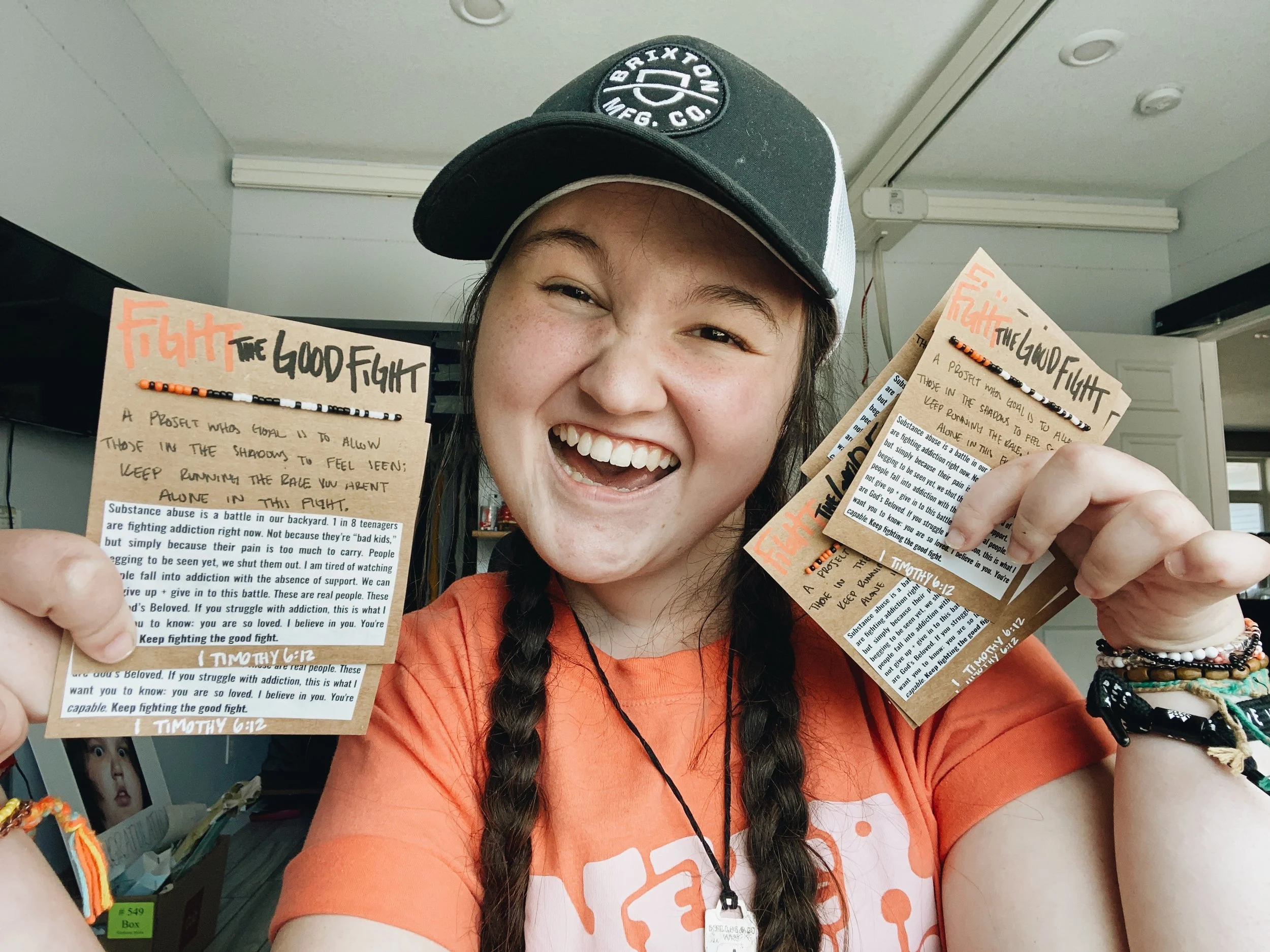
That night, I decided to do something. “Fight The Good Fight” was born as a bracelet project to spread awareness and compassion for addiction.
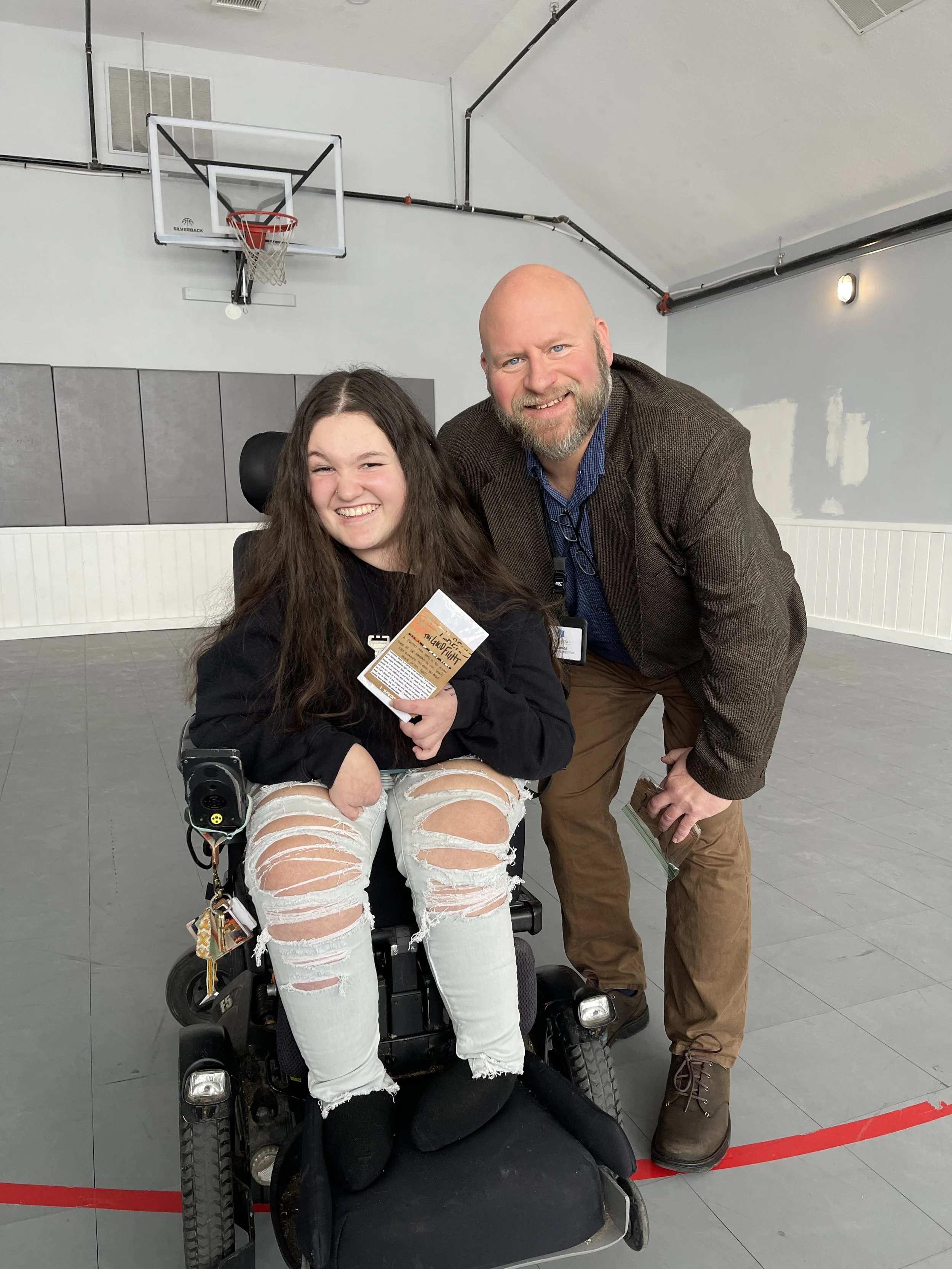
For the duration of FTGF in high school, I was able to raise $619. I didn’t want to keep the money. After spending time thinking about it, I decided to donate to my local treatment center.
I’d learned that it was for-profit, but I could still donate towards specific projects or supplies for residents. After choosing the supplies to donate, I spent time with friends customizing them and writing notes of encouragement to the residents.
Following my senior year of high school, I got to drop off needed supplies for those in recovery and spent time dreaming with their staff. Walking past residents, I saw their faces light up as they saw someone who cared enough to do something.
After distributing the supplies, treatment staff and I sat with tender hearts, amazed by what can happen when people feel motivated to make a change. Local impact was made possible not just because I took action, but because people believed a bracelet project could make a difference.
I came home, finalized my journal entries, and knew this high school passion project would become more than bracelets. Now, as a youth advocacy organization, Fight The Good Fight works to bridge the gap between adolescent substance use and support systems in schools. We still distribute bracelets, but work to bridge the gap through 4 pillars of action.
Local impact, greater dream.